
Attic Spray Foam Insulation in Temple Texas
Temple Spray Foam Pros provides professional attic spray foam insulation for homeowners throughout Temple, TX. Open-cell and closed cell spray foam can be used in suitable attic assemblies to help reduce air leakage, limit heat transfer, and create a more continuous insulation system around gaps, framing, and other difficult areas.
Before recommending an insulation installation approach, trained technicians evaluate existing materials, attic configuration, ventilation, moisture conditions, accessibility, and the intended thermal boundary. These property-specific conditions help determine the appropriate foam type, preparation requirements, coverage, and application method for the attic..
Request a Free Quote
We will get back to you as soon as possible.
Please try again later.
Overview
Spray Foam Attic Insulation Solutions Across Temple
Other Services:
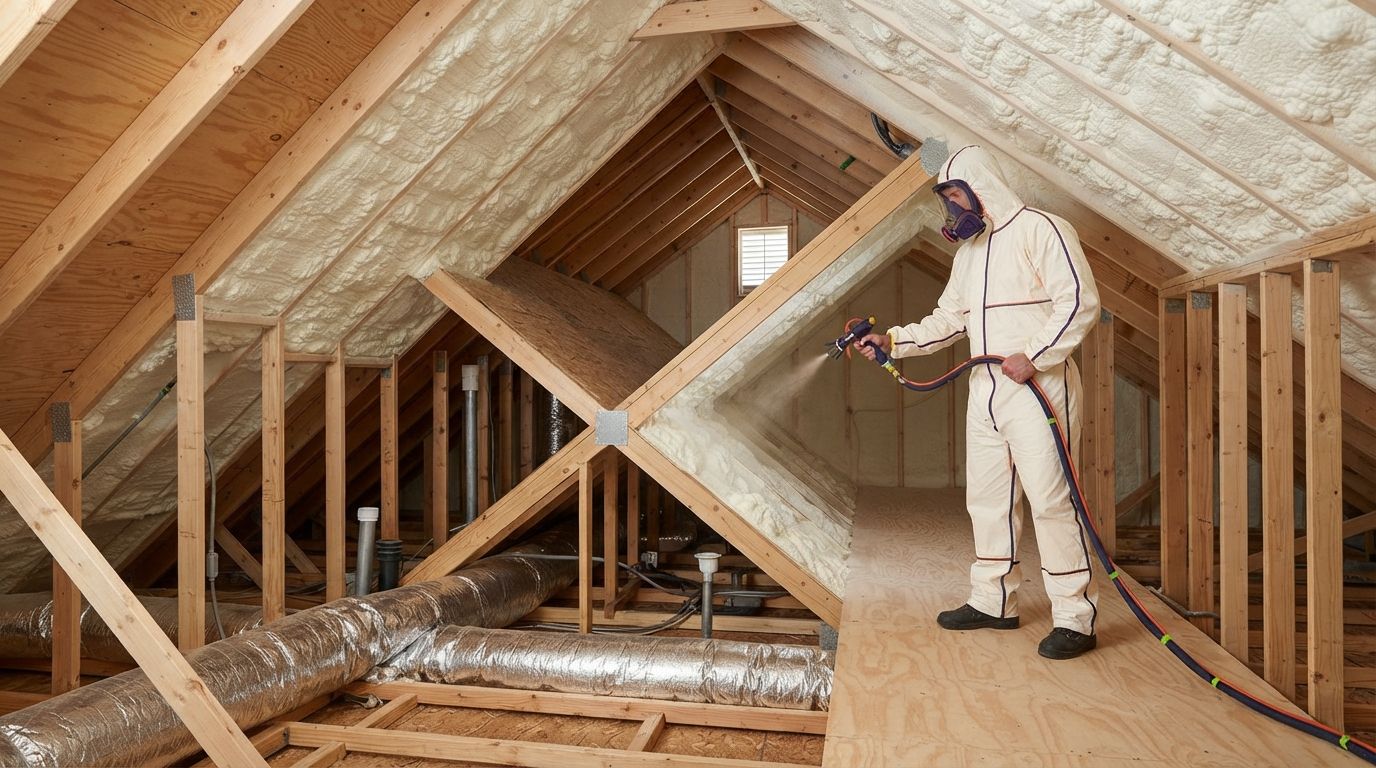
Temple's hot summers, seasonal humidity, and cooler winter conditions place demands on attic insulation and air-control layers. Spray foam can conform around gaps, framing, and penetrations along the roof deck, helping reduce air movement and support thermal performance. Open-cell and closed cell spray foam have different densities, vapor characteristics, and requirements. Selecting between these insulation types depends on attic space, cavity depth, ventilation, moisture, materials, and the intended thermal boundary. Closed-cell products provide a higher R-value per inch, while open-cell foam provides different density and vapor characteristics. Professional installation includes surface preparation, controlled application, coverage, and safety procedures based on the attic assembly. An attic assessment can determine whether the selected material and installation method are suitable.
Problem
Common Signs Your Existing Attic Insulation Needs Attention
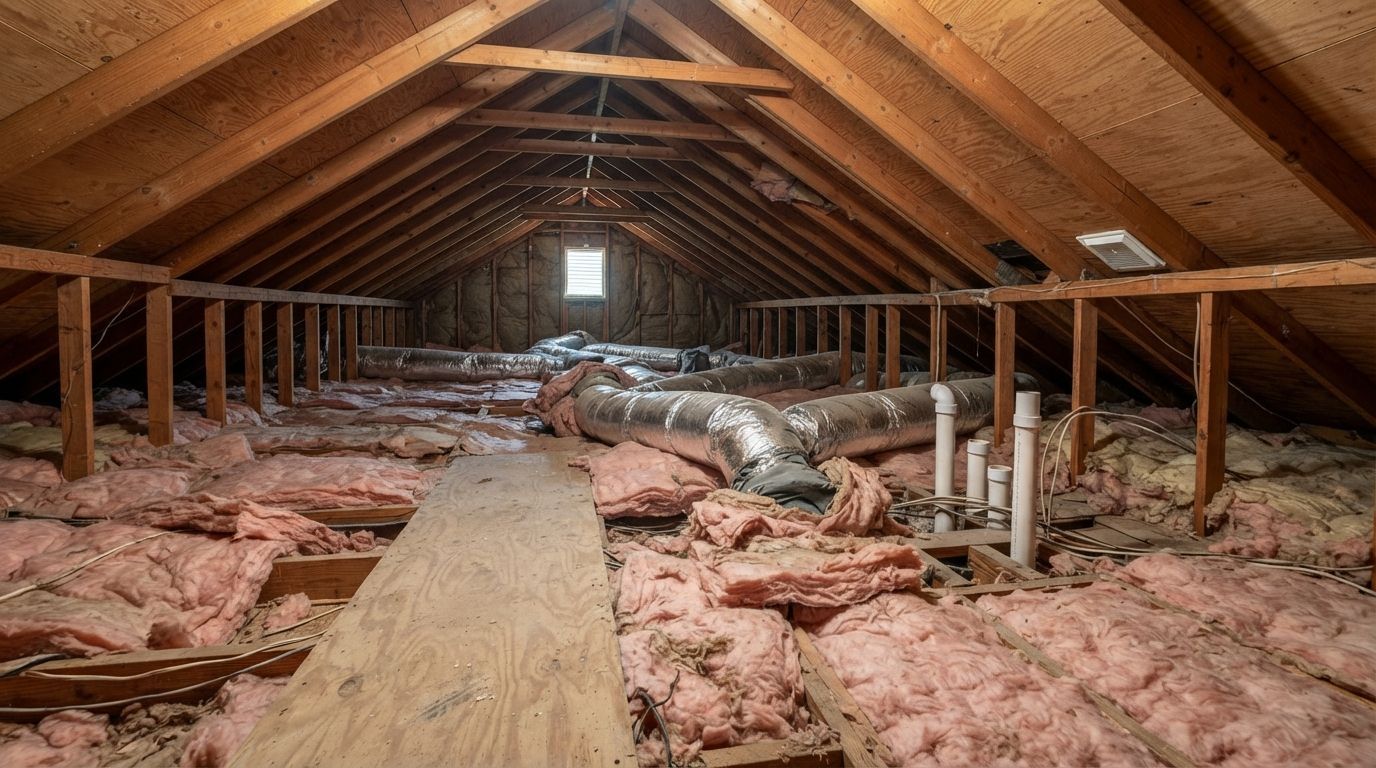
Rising heating or cooling costs, uneven room temperatures, drafts, visible coverage gaps, deteriorated materials, or an attic that becomes excessively hot can indicate inadequate insulation. Without proper attic insulation, unwanted heat transfer and air movement may become more noticeable throughout the home. Moisture staining, musty odors, or visible biological growth also warrant investigation before new material is installed. Gaps around an attic hatch, penetrations, and other accessible openings may also contribute to unwanted air movement between the attic and conditioned areas.
These conditions do not automatically mean spray foam is required. A professional assessment can examine the current materials, ventilation, moisture conditions, air leakage, accessibility, and thermal boundary to determine whether replacement, attic floor air sealing, foam application, or another option should be considered. Proper insulation helps support the building's thermal boundary when installed in suitable locations.
Got More Questions? Contact Temple Spray Foam Pros.
Our Process
Our Professional Attic Spray Foam Insulation Process
See how our team professionally installs spray foam insulation in attics.
01.
Attic Assessment
Technicians evaluate the attic, existing materials, vents, moisture conditions, penetrations, attic hatch, and areas of uncontrolled air leakage.
02.
Surface Preparation
Application surfaces are prepared based on attic conditions, insulation, ventilation, and the intended thermal and air-control boundaries.
03.
Foam Application
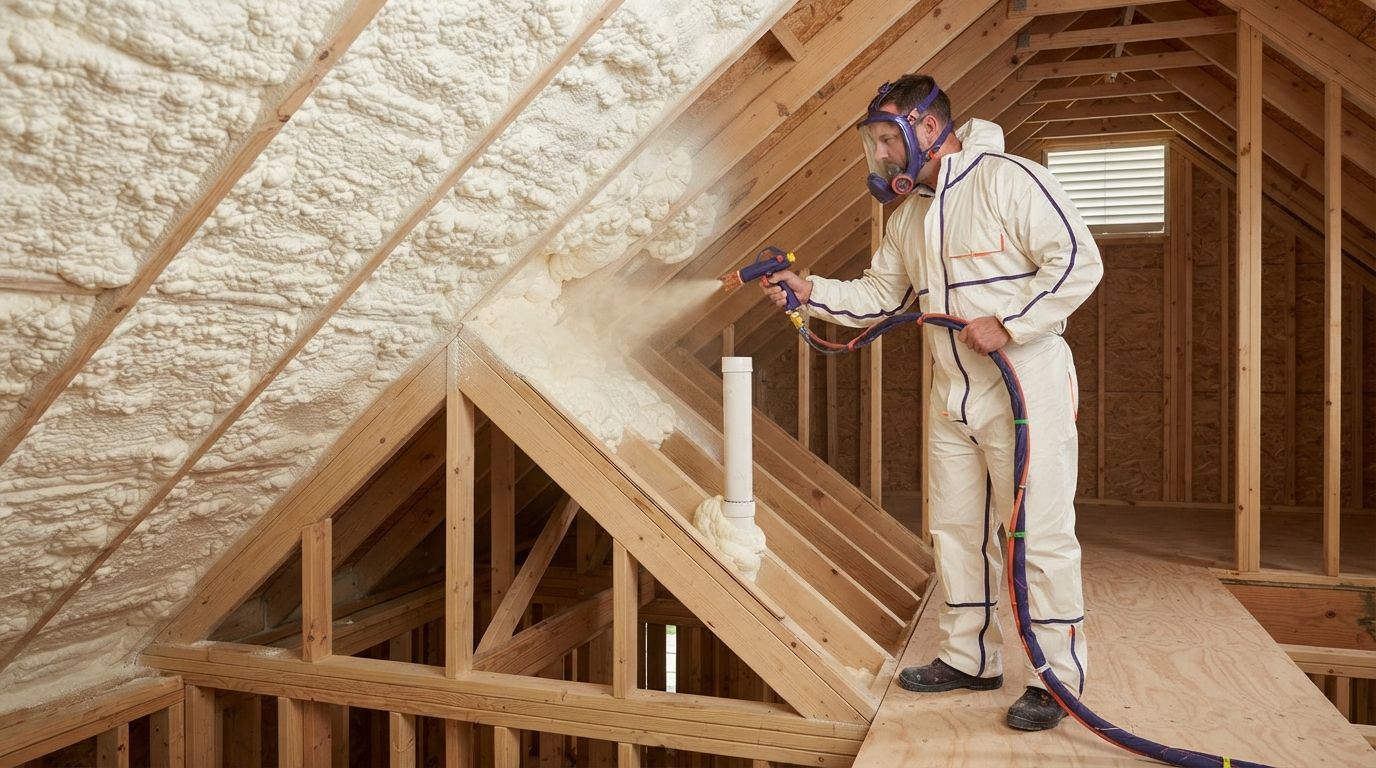
Professional equipment applies open-cell or closed cell spray foam at the required thickness based on attic configuration.
04.
Final Inspection
After foam applied to the attic cures, technicians review coverage and provide ventilation, safety, and re-entry guidance.
Ready to Improve Your Insulation?
Choose attic spray foam insulation for your Temple property. Contact our team to schedule an assessment.
Cost
Factors Affecting Spray Foam Attic Insulation Costs
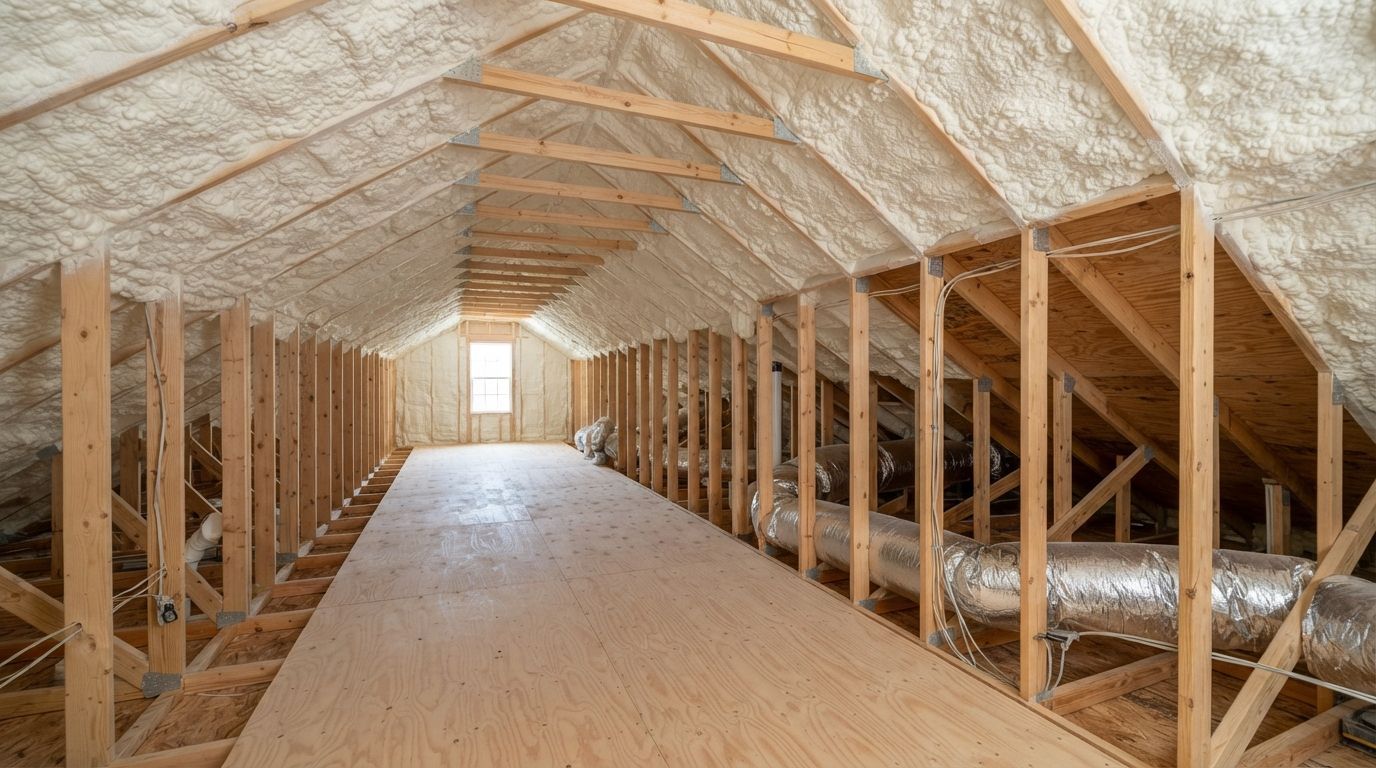
Spray foam attic insulation costs vary from one property to another because every attic has different dimensions, construction details, materials, and installation requirements. The overall project scope should account for attic size, foam type, application thickness, accessibility, roof configuration, surface preparation, and labor. Foam costs may also vary depending on the product and amount of material required, with some projects calculated per board foot. Existing insulation, difficult-to-access areas, moisture conditions, ventilation, and roof design can also affect installation. A property assessment allows technicians to evaluate these conditions before they install attic insulation and develop an estimate based on project requirements.
Project Size
Attic size, foam thickness, and material requirements affect costs.
Attic Conditions
Accessibility, existing insulation, ventilation, and roof design influence costs.
Temple Spray Foam Pros
Why Choose Our Attic Insulation Services?
Temple Spray Foam Pros approaches attic insulation as part of the home’s overall building envelope. Before recommending an installation approach, trained insulation professionals evaluate the attic and roof assembly to understand the property’s specific conditions and insulation requirements.
Important considerations include:
- Existing attic insulation and building materials
- Roof assembly and attic configuration
- Accessible areas of air leakage
- Ventilation and moisture conditions
- Location of the intended thermal boundary
- Open-cell or closed-cell foam selection
- Required application thickness and coverage
- Floor insulation or roof-deck application
- Vented attic or unvented attic configuration
Professional-grade equipment, careful preparation, controlled foam application, and safety-focused procedures help support consistent installation. Material selection and application thickness are based on actual project requirements rather than assuming one system is appropriate for every property. A final coverage inspection also helps identify areas requiring attention before the attic insulation work is completed.
How do I know if my attic needs better insulation?
Common signs include uneven indoor temperatures, drafts, rising heating or cooling costs, visible gaps, and compressed or deteriorated materials. Moisture staining or musty odors should also be investigated before adding insulation.
A professional attic assessment can evaluate the insulation level, accessible air leakage, ventilation, moisture conditions, and thermal boundary to determine whether the attic has adequate coverage. Without proper attic insulation, gaps or deteriorated materials may reduce the effectiveness of the home's thermal boundary.
How much does attic spray foam insulation cost in Temple?
Costs depend on attic size, material type, application thickness, roof configuration, accessibility, surface preparation, and existing materials. Foam costs may also differ between open-cell and closed cell spray foam, and some material calculations may be expressed per board foot.
Projects where old material must be removed or additional preparation is required may involve more labor and materials. For Temple homeowners, a professional assessment allows an insulation contractor to evaluate actual conditions before preparing an estimate.
Is attic spray foam suitable for Temple's hot climate?
Spray foam may be suitable for Temple homes where the attic assembly supports its use. Local heat makes the location of the thermal and air-control boundaries important, while seasonal humidity requires careful moisture and ventilation planning.
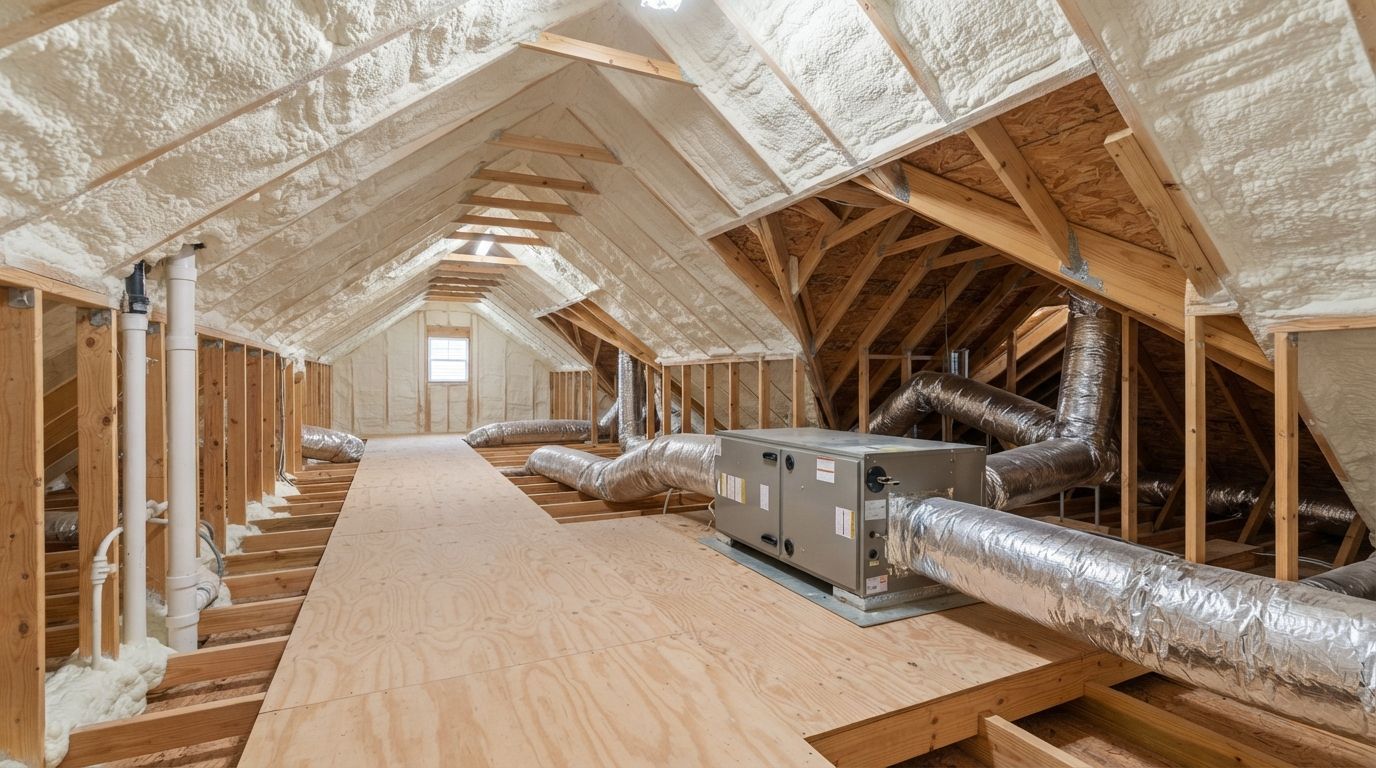
Technicians should evaluate whether the property has a vented attic or is designed as an unvented attic, along with roof construction, HVAC configuration, and moisture conditions. The selected approach should account for how the assembly manages heat, moisture, and attic air.
Can spray foam be applied directly to roof rafters?
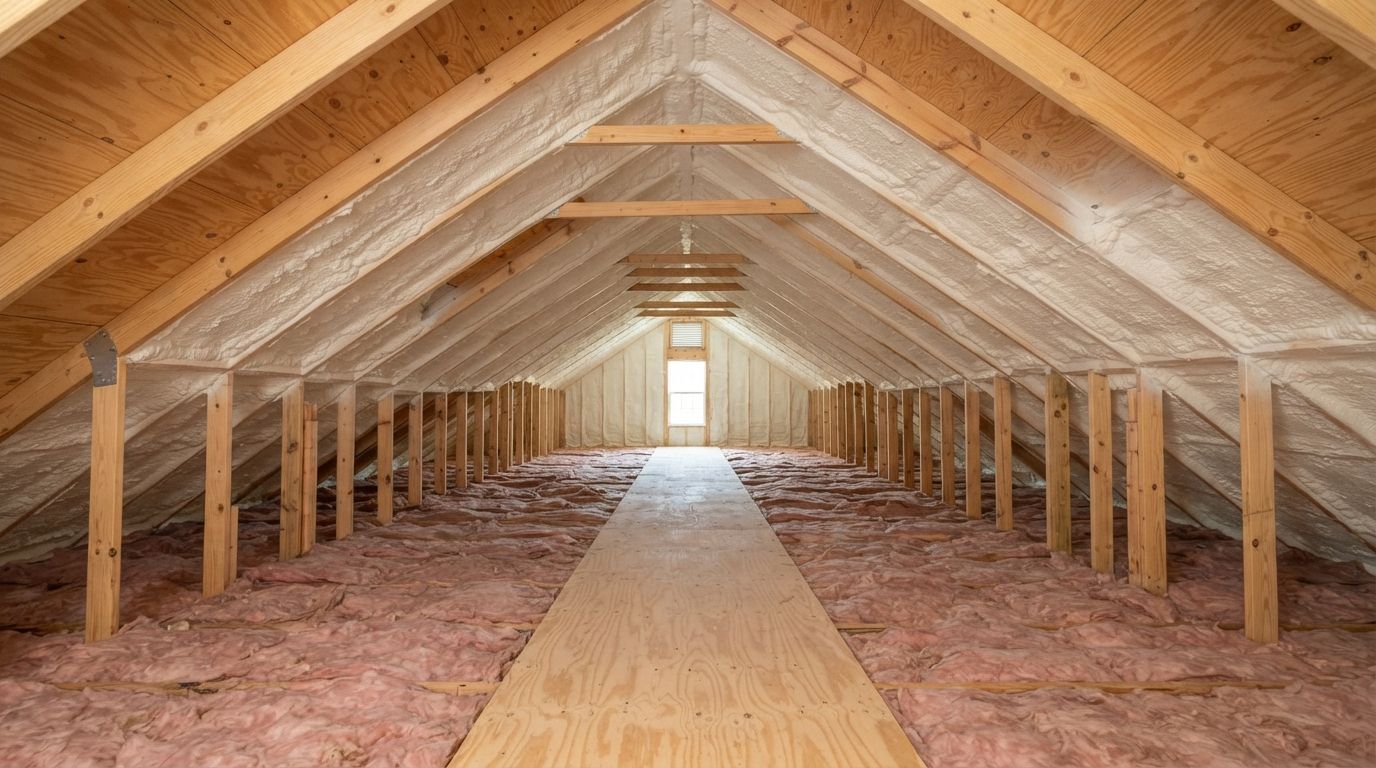
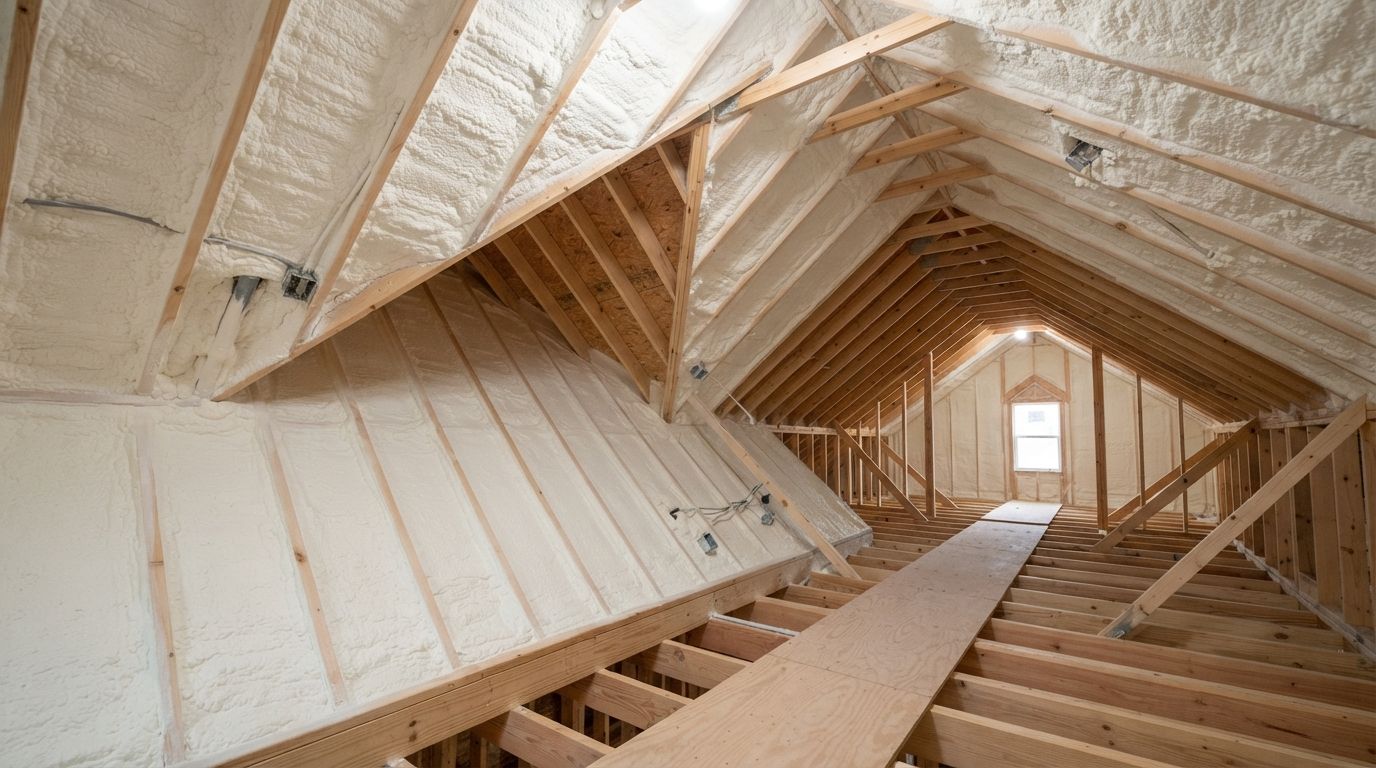
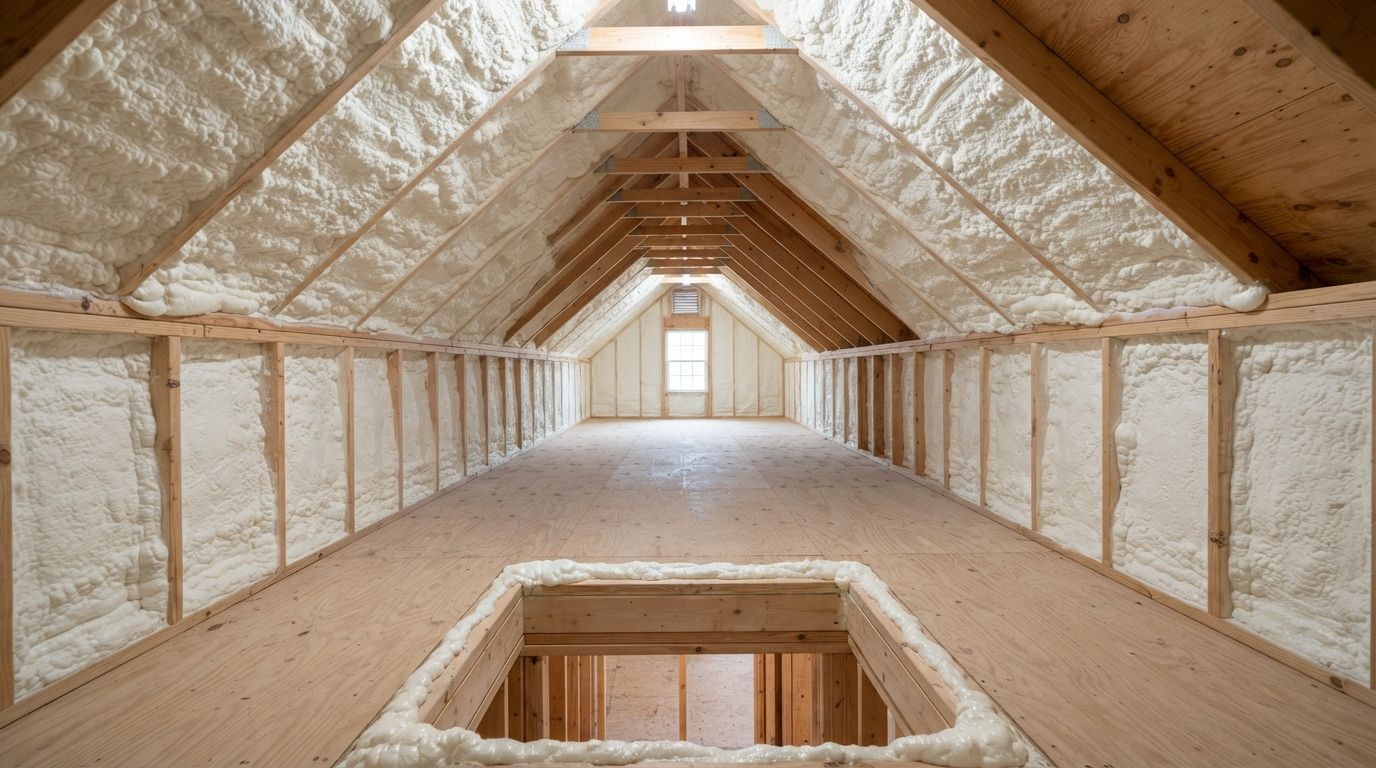
Spray foam may be applied to suitable roof deck and rafter assemblies when the substrate, moisture conditions, ventilation strategy, and building design support that approach. Insulation at the underside of the roof creates a different thermal boundary than floor insulation at the attic level.
Trained professionals should evaluate the assembly before selecting open-cell or closed-cell foam and determining the appropriate application method. Unlike traditional insulation installed primarily along the attic floor, a roof-deck application can shift the location of the thermal boundary.
Does attic spray foam help reduce air leakage?
Spray foam seals suitable gaps by expanding around framing, penetrations, and irregular surfaces during application. When properly incorporated into the attic's air-control layer, this air sealing can help limit unwanted air movement between the attic and living space.
Professional installation should also account for ventilation components, combustion equipment, moisture conditions, and building features that should not be sealed without evaluating their function. Properly installed insulation in the attic can support thermal control, while targeted sealing can address suitable leakage areas around penetrations and other openings.
FAQs
Frequently Asked Questions About Attic Spray Foam Insulation in Temple
Find answers to common questions about our services, process, costs, and available options.
Temple Spray Foam Pros
Request a Attic Spray Foam Insulation Estimate
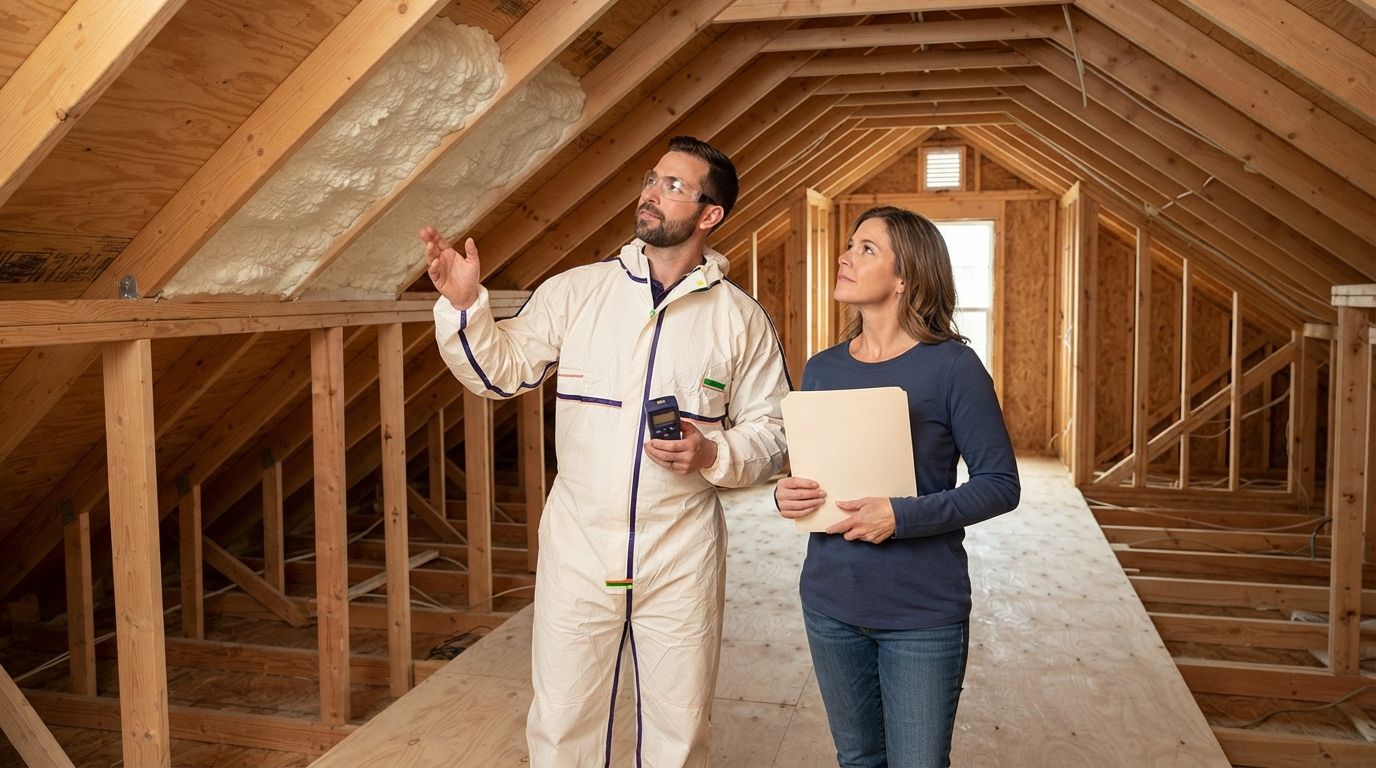
Homeowners considering attic spray foam insulation can request an assessment to determine an appropriate approach for their Temple property. Trained technicians evaluate existing materials, roof construction, accessible air leakage areas, ventilation, moisture conditions, attic access, and the intended thermal boundary before developing a proposed scope of work. The assessment helps determine suitable application areas, insulation types, preparation requirements, coverage, and application thickness based on actual property conditions. Technicians can also evaluate surface conditions, existing insulation performance, accessibility challenges, and areas requiring additional preparation before installation begins.
It can also identify whether qualifying insulation products or specific project requirements apply to the proposed work. These property-specific findings help establish an installation approach that reflects the attic configuration, selected material, and intended thermal performance. A final coverage inspection can then review visible application conditions, foam coverage, and completed areas before the project is finished. This provides an additional opportunity to identify areas requiring attention and confirm that the planned insulation work has been completed..