
Harker Heights Texas Spray Foam Insulation – Hillside Residential Community
Temple Spray Foam Pros provides spray foam insulation for Harker Heights properties, including attic insulation, wall applications, and closed-cell foam for suitable structures. The city's rolling terrain, established residential areas, and continued development can create different building-envelope conditions. Call 254-500-2666 to discuss your property and insulation project.
Problems
Central Texas Heat Can Increase Attic and Building-Envelope Demands
Harker Heights includes established properties, renovated buildings, and newer construction across its rolling Central Texas terrain, resulting in different insulation conditions and building requirements. During hot summer weather, roof and attic assemblies can experience significant thermal exposure, making consistent insulation coverage and air sealing important. Gaps around ceiling penetrations, attic access points, framing, wiring, plumbing, and duct openings can contribute to unwanted airflow and heat transfer. Spray foam can provide insulation and air sealing in suitable assemblies, but the appropriate application depends on existing materials, ventilation, moisture conditions, accessibility, building construction, and the location of the intended thermal boundary.
Top Services
Attic Spray Foam Insulation for Harker Heights Homes
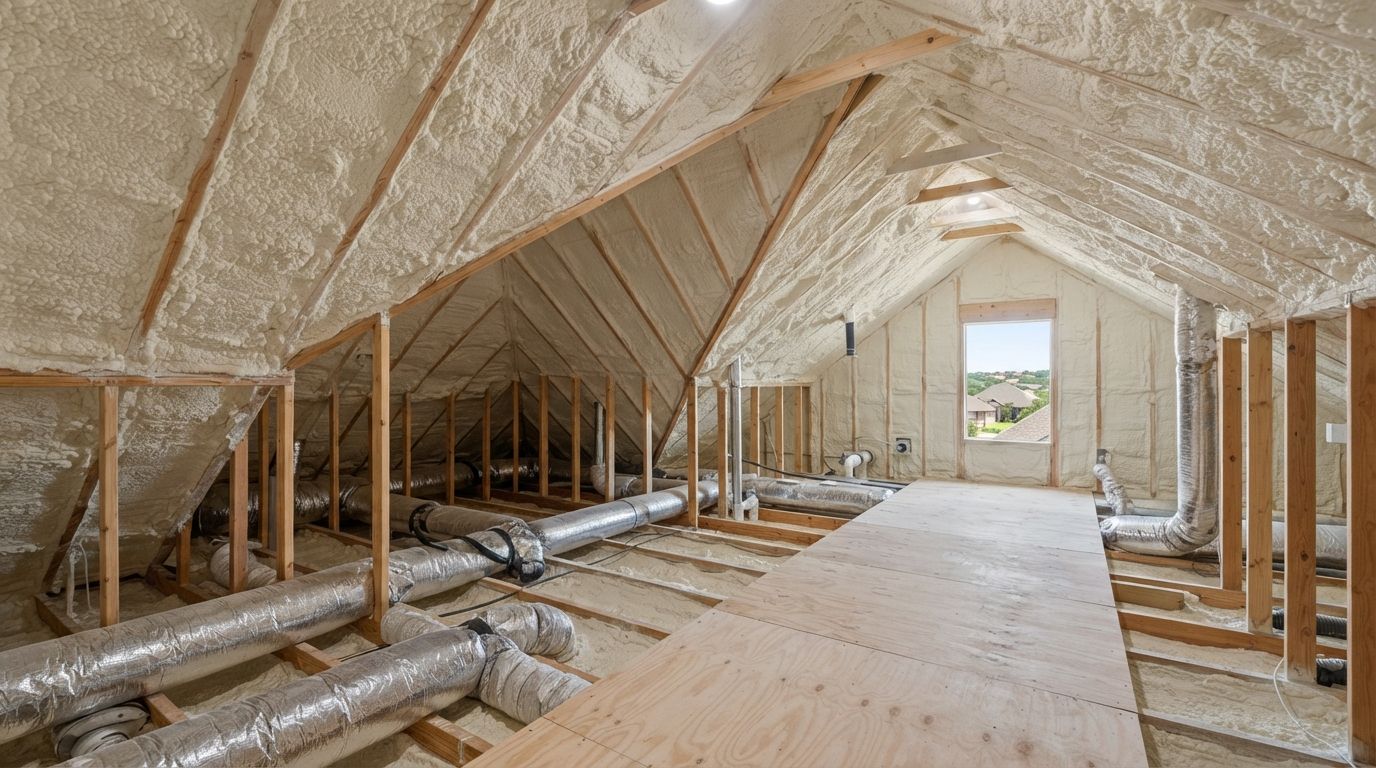
Attics are an important area to evaluate when rooms become difficult to keep comfortable or existing insulation leaves gaps around the building envelope. Spray foam may be installed along an appropriate attic assembly to create a more continuous insulation and air-control layer.
Before application, technicians should evaluate roof-deck conditions, existing insulation, penetrations, attic access, ventilation, and HVAC equipment located within the space. Air sealing around openings and transitions also matters because uncontrolled air movement can reduce the effectiveness of otherwise adequate insulation.
Wall Spray Foam for New Construction and Renovations
Harker Heights includes both established developed areas and continued residential construction, making wall insulation relevant during renovations, additions, and new construction where framing is accessible.
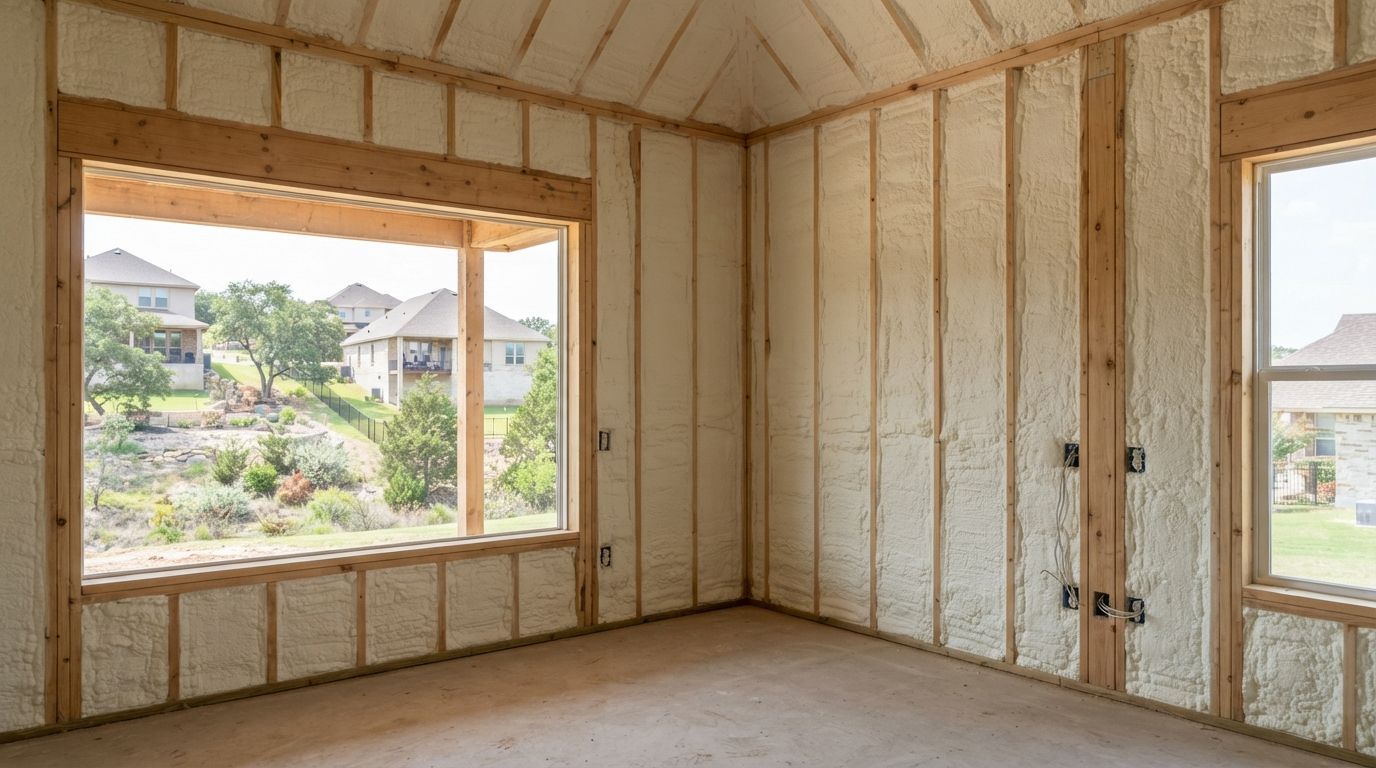
Spray foam can be applied between exposed wall studs, expanding around framing, wiring, plumbing, and other penetrations. This can create a more continuous insulation layer while reducing potential air pathways through the wall assembly. Wall accessibility, cavity depth, electrical and plumbing components, surface condition, moisture considerations, and the selected foam product should all be reviewed before installation begins.
Closed-Cell Spray Foam for Garages and Metal Structures
Closed-cell spray foam can be considered for garages, workshops, metal buildings, and other suitable structures where limited cavity depth, air leakage, or exposed metal assemblies influence insulation planning.
Because closed-cell foam is denser than open-cell material, the two products should not be treated as interchangeable. Surface condition, required coverage, moisture behavior, intended building use, available space, and application thickness all affect material selection. Metal surfaces also require appropriate preparation for proper foam adhesion. Evaluating the complete assembly first helps determine whether closed-cell foam is suitable for the structure.
Cost
What Affects Spray Foam Insulation Cost in Harker Heights?
Project cost depends on application size, open-cell or closed-cell material selection, required thickness, accessibility, surface preparation, and the condition of existing insulation. Removing old material or preparing irregular and difficult-to-access surfaces can also affect the project scope.
An exposed-wall installation can involve different labor and preparation than retrofitting an occupied home's attic or insulating a metal structure. An on-site assessment provides a clearer basis for determining material requirements, preparation needs, and the overall scope of work.
Areas We Serve
Nearby Service Areas Around Harker Heights
Temple Spray Foam Pros
Why Choose Temple Spray Foam Pros?
A spray foam project should begin with an evaluation of building conditions rather than automatically selecting a foam product. Existing insulation, application surfaces, air-leakage points, ventilation, moisture concerns, accessibility, and the intended thermal boundary should be considered before recommendations are made.
Proper surface preparation, professional equipment, controlled application methods, and appropriate material selection also matter. These practices help maintain consistent coverage around framing, penetrations, and transitions while allowing the installation approach to reflect the needs of the actual building assembly.
FAQs
Frequently Asked Questions About Spray Foam Insulation in Harker Heights
Can spray foam help with attic heat during Central Texas summers?
Spray foam can reduce heat transfer when properly incorporated into an appropriate attic assembly. This can be particularly relevant during periods of high Central Texas temperatures when roof and attic areas experience increased thermal exposure. The attic configuration, ventilation strategy, existing insulation, and location of the thermal boundary should be evaluated first.
Do homes on Harker Heights' hilly terrain require different insulation?
Terrain alone does not determine the appropriate insulation system. However, properties across Harker Heights can differ in foundation configuration, exposure, construction, and building design. Insulation recommendations should therefore be based on the actual building envelope and existing property conditions rather than terrain alone.
Should spray foam go on the attic floor or roof deck?
It depends on how the attic and building envelope are designed. In a traditional vented attic, the thermal and air-control boundary is generally established at ceiling level. Other assemblies may establish the thermal boundary at the roof deck. Changing that configuration requires careful consideration of ventilation, moisture, and HVAC conditions.
Is open-cell or closed-cell spray foam better?
Neither is automatically better for every project. Open-cell and closed-cell foam differ in density, vapor characteristics, expansion, and insulation performance per inch. Application area, cavity depth, moisture considerations, and the overall assembly should guide material selection.
Does old attic insulation need to be removed?
Not necessarily. Existing material should first be inspected for condition, moisture, contamination, placement, and compatibility with the proposed insulation strategy. Removal may be appropriate when old material interferes with preparation or the planned thermal boundary, but it should not be assumed for every attic.
Request a Free Quote
We will get back to you as soon as possible.
Please try again later.